
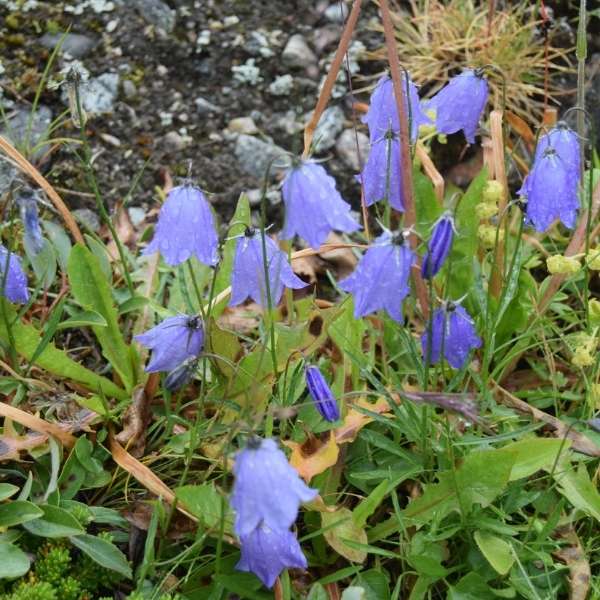
Campanula rotundifolia (Common Harebell) is a perennial species that has a clumping growth habit and produces two types of leaf. Like other Campanulas, it has basal rounded foliage and narrower leaves on slim, erect stems higher up. Flowers are dark purple or white, bell-shaped, hang from branched stalks and appear in summer.
Description from candide.com
Home > Plant Guide >
Scientific Name
Family
Garden Type
Wildlife
Native Plant Region
Light needs
Water Needs
Plant Type
Bloom Color(s)
Height
Width
Months in Bloom
Safe Beneath Power Lines?
We’d like to maintain accurate and robust plant listings. If you see information that is not correct or that could be added to improve the listing, please let us know. Or if you’d like to suggest a plant to add to our plant guide, you can use this form do so. Thank you!

Protecting the trees and other vegetation that what we currently have is perhaps the most important way to ensure biodiversity in cities.

Learn about the diversity in pigeon populations in the United States and the implications of this variability on the species.

Some introduced plant species can diminish biodiversity. Other plants produce poisons that can harm wildlife. Learn what plants to avoid when figuring out what to plant or remove in your outdoor space.
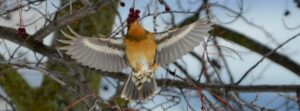
Despite the urban character and the high population density, a surprising diversity of life exists in Capitol Hill. Explore a few physical aspects of our urban ecosystems and meet some of its more-than-human residents.

Gardeners can check out seeds for free from the library to plant. Then after harvest, gardeners bring seeds back to the library for others to enjoy in future growing seasons.

Do you wonder how a cat can be happy indoors? This presentation will give you a better understanding of cat behavior and the confidence that an indoor cat can be a happy cat.
Nature of Your Neighborhood is a collaboration between Birds Connect Seattle, the Capitol Hill EcoDistrict, and the Seattle Bird Conservation Partnership. Our goal is to foster relationships between the people and the nature of their neighborhoods.