
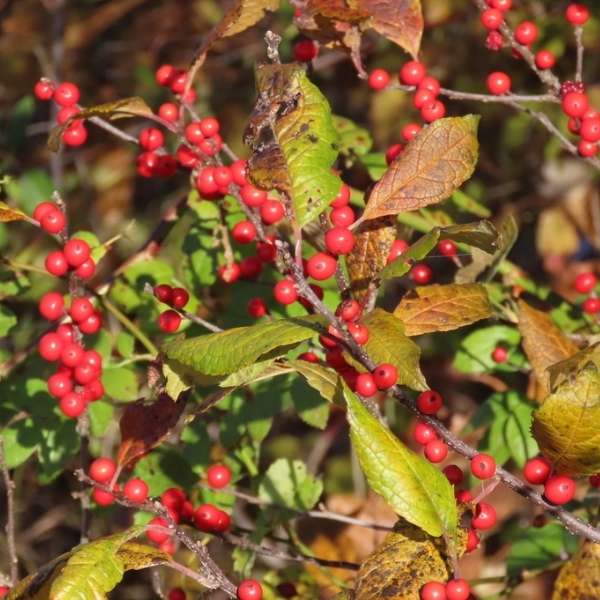
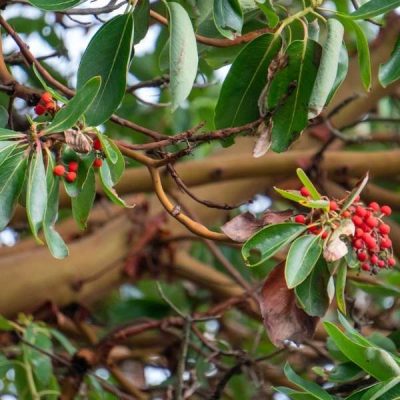
Winterberry holly (Ilex verticillata) is a deciduous shrub that is native to the eastern U.S. It is a great addition to the landscape because it produces bright red berries that persist through the entire winter and into spring. Winterberry holly leaves are dark green and elliptical, about two to three inches long. Greenish-white flowers appear on female plants in spring, which, if properly pollinated by a male plant, produce a dense crop of bright red berries in the fall. A slow-growing shrub with a rounded upright growth habit, winterberry typically grows 3 to 15 feet tall and readily suckers and spreads to form large thickets. It is generally planted in late summer to early fall, though spring planting is usually successful, as well. Winterberry holly is often associated with the Christmas holiday season and their berry-laden stems are used to add color to evergreen arrangements. Description from The Spruce
Home > Plant Guide >
Scientific Name
Family
Garden Type
Wildlife
Native Plant Region
Light needs
Water Needs
Plant Type
Bloom Color(s)
Height
Width
Months in Bloom
Safe Beneath Power Lines?
We’d like to maintain accurate and robust plant listings. If you see information that is not correct or that could be added to improve the listing, please let us know. Or if you’d like to suggest a plant to add to our plant guide, you can use this form do so. Thank you!

Do you wonder how a cat can be happy indoors? This presentation will give you a better understanding of cat behavior and the confidence that an indoor cat can be a happy cat.

Protecting the trees and other vegetation that what we currently have is perhaps the most important way to ensure biodiversity in cities.

Three inspiring local food justice practitioners will share how their work in urban farming improves access to healthy foods, fosters relationships to land, and builds community.

Gardeners can check out seeds for free from the library to plant. Then after harvest, gardeners bring seeds back to the library for others to enjoy in future growing seasons.

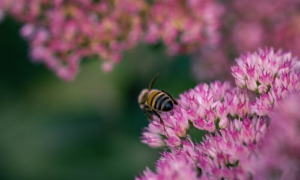
Look closer…and meet the local insects that pollinate the plants around your Seattle neighborhoods. Learn about some of our amazing native pollinating insects.
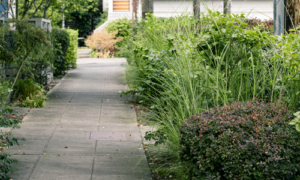
Take a virtual trip across Capitol Hill to learn about urban habitat types, how to identify the unique birds they support, and what we can do to make the neighborhood a safer place for them to live.
Nature of Your Neighborhood is a collaboration between Birds Connect Seattle, the Capitol Hill EcoDistrict, and the Seattle Bird Conservation Partnership. Our goal is to foster relationships between the people and the nature of their neighborhoods.